Sound Bath Sessions Are Replacing Traditional Meditation Classes
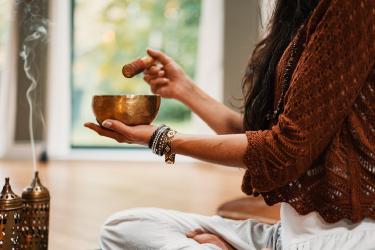
You’re lying on a yoga mat in a dim room. There’s no instructor telling you to clear your mind. No guided visualization. Just sound-waves of it-washing over you like some kind of auditory massage.
Welcome to a sound bath.
These sessions are popping up everywhere. Yoga studios, wellness centers, even corporate offices. And they’re pulling people away from traditional meditation classes at a surprising rate. But what’s actually happening here? Is this legitimate stress relief or just trendy wellness nonsense?
What Exactly Happens During a Sound Bath?
A sound bath isn’t a bath at all. Nobody’s getting wet. Instead, you’re “bathed” in sound waves produced by various instruments-crystal singing bowls being the most popular. Tibetan bowls, gongs, chimes, and tuning forks also make appearances.
You typically lie down on a mat or sit comfortably. The practitioner plays these instruments, creating overlapping tones and vibrations that fill the room. Sessions usually last 45 minutes to an hour.
Here’s where it gets interesting. Unlike meditation, you don’t have to do anything. No focusing on your breath - no mantras. No wrestling with your wandering thoughts. You just - exist in the sound.
“The first time I tried it, I was skeptical,” says Maya, a 34-year-old marketing manager who now attends weekly sessions. “I’d failed at meditation apps probably fifteen times. But lying there with those sounds? My brain finally shut up.
That’s the appeal for a lot of people. Traditional meditation requires effort. Sound baths don’t-at least not in the same way.
Why People Are Making the Switch
Let’s be honest about something - meditation is hard. Really hard.
Studies show that roughly 8% of Americans have tried meditation. But sticking with it - that’s a different story. Most people give up within the first few weeks. The whole “observe your thoughts without judgment” thing sounds simple until you’re actually doing it and your brain won’t stop planning dinner.
Sound baths offer a shortcut of sorts. The external stimulation gives your mind something to latch onto without requiring active concentration. Think of it like the difference between running on a treadmill staring at a wall versus running on a scenic trail. Same exercise, but one feels significantly easier.
There’s also the group element. While you can meditate alone (and most do), sound baths are inherently communal experiences. Something about lying in a room with twenty strangers, all quietly absorbing the same sonic waves, creates a sense of connection.
“I’d never sit in a meditation circle,” admits Jordan, a software developer. “Too vulnerable. But somehow the sound bath feels different. Less exposed.
The Science Part (Without Getting Too Nerdy)
Researchers are starting to pay attention to this trend. A 2020 study published in the Journal of Evidence-Based Integrative Medicine found that participants experienced significant reductions in tension, anger, fatigue, and depressed mood after a single sound bath session.
The proposed mechanism involves brainwave entrainment. Basically, the frequencies produced by singing bowls can influence your brainwave patterns, potentially shifting you from active beta states into more relaxed alpha or even theta states. This is the same territory that experienced meditators reach-just through a different door.
Now, caveat time - the research is still limited. Most studies have small sample sizes. Placebo effects are difficult to control for when everyone knows they’re at a sound healing session. We need more rigorous investigation.
But but-does the mechanism matter if the results are real? If someone leaves a sound bath feeling calmer and more grounded, that benefit exists regardless of whether we fully understand the “why.
Crystal Bowls vs. Traditional Instruments
Not all sound baths are created equal. The instruments matter.
Crystal singing bowls, made from crushed quartz, produce a pure, sustained tone. They’re loud. You feel them in your chest. Some practitioners tune different bowls to different notes, claiming connections to various chakras. Whether you buy the chakra stuff or not, the sound is undeniably immersive.
Tibetan metal bowls have a warmer, more complex tone with multiple overtones ringing simultaneously. They’ve been used in Buddhist meditation practices for centuries-so there’s genuine tradition behind them.
Gongs create something different entirely - they’re chaotic. Unpredictable. Some people love the full-body wall of sound. Others find it overwhelming.
My recommendation - try different types before deciding. Your nervous system might respond better to one versus another.
The Downsides Nobody Talks About
Okay, so sound baths aren’t perfect. A few things to consider.
First, cost. A single session typically runs $25-50. Traditional meditation is free. Apps cost maybe $70 per year. If you’re attending weekly sound baths, that adds up to $1,300-2,600 annually. That’s a legitimate expense.
Second, accessibility. You need to physically go somewhere. Meditation you can do in your car, at your desk, in bed at 3 AM when you can’t sleep. Sound baths require showing up to a specific place at a specific time.
Third, some people genuinely dislike them. The sounds can feel intrusive or irritating rather than relaxing. If you’re sensitive to noise or have certain types of anxiety, a room full of reverberating frequencies might make things worse, not better.
And finally-the wellness industrial complex has definitely gotten its hands on this. You’ll encounter practitioners making claims about “cellular healing” and “molecular restructuring” that have zero scientific backing. Some charge hundreds of dollars for “premium” experiences that aren’t measurably different from basic sessions.
How to Try Your First Sound Bath
Curious? Here’s how to dip your toe in.
Start with a studio that specializes in sound healing rather than a yoga studio that offers occasional sessions. The quality varies dramatically, and specialists tend to have better equipment and more experience.
Wear comfortable clothes. You’ll be lying still for an hour. Yoga pants and a soft shirt work perfectly.
Bring a blanket. Body temperature drops when you’re deeply relaxed. Being cold will pull you out of the experience.
Arrive early. Rushing in stressed defeats the purpose. Give yourself ten minutes to settle.
Don’t eat a huge meal beforehand. A full stomach plus deep relaxation can equal discomfort. Light snack, fine - burrito, not so much.
And maybe skip the skepticism for one hour? You don’t have to believe in chakras or energy healing. But showing up with arms crossed and eyebrows raised practically guarantees you won’t get much from it.
The Verdict
Sound baths aren’t going to cure your anxiety disorder. They’re not a replacement for therapy or medication if you genuinely need those things. And some of the claims made by practitioners venture into pseudoscience territory.
But as a stress relief tool? As a way to give your overworked brain a break? They work for a lot of people.
Traditional meditation will always have its place. It’s free, portable, and backed by decades of research. For some people, that discipline and internal focus is exactly what they need.
But if you’ve tried meditation repeatedly and it just doesn’t click, sound baths offer an alternative path to the same destination. Less effort - more external support. Different experience, similar outcomes.
Maybe that’s not cheating. Maybe it’s just finding what actually works for you.