Red Light Therapy for Brain Health and Seasonal Depression
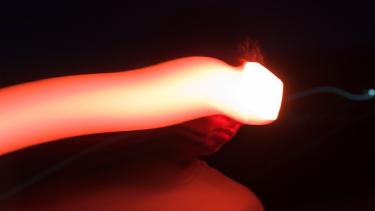
Have you ever noticed how much better you feel after spending time in the sunshine? There’s actual science behind that mood boost, and it’s driving one of the most interesting wellness trends right now: red light therapy.
I stumbled onto this topic last winter when a friend mentioned she’d bought a red light panel for her seasonal depression. My first thought - sounds like expensive nonsense. But then I started digging into the research, and honestly, I was surprised by what I found.
What Exactly Is Red Light Therapy?
Red light therapy (also called photobiomodulation, if you want to sound fancy at parties) uses specific wavelengths of red and near-infrared light to penetrate your skin and tissues. We’re talking wavelengths between 630-850 nanometers.
Here’s where it gets interesting. Unlike UV light from the sun, which can damage your skin, red and near-infrared light doesn’t carry that risk. Instead, these wavelengths appear to do something pretty cool at the cellular level.
Your mitochondria-those tiny powerhouses inside your cells you learned about in high school biology-contain a molecule called cytochrome c oxidase. Red light wavelengths seem to stimulate this molecule, potentially boosting cellular energy production. More cellular energy means your cells can function better and repair themselves more efficiently.
At least, that’s the theory. And there’s growing evidence to support it.
The Brain Health Connection
So how does shining red light on yourself help your brain?
Near-infrared light can actually penetrate your skull. Not deeply-we’re talking about 2-3 centimeters-but enough to reach the outer layers of your brain, particularly the prefrontal cortex. This is the area responsible for decision-making, emotional regulation, and complex thinking.
A 2019 study from the University of Texas at Austin found that participants who received transcranial photobiomodulation showed improved attention, memory, and mood compared to a placebo group. The improvements weren’t massive, but they were statistically significant.
Another study published in Photomedicine and Laser Surgery found that people with traumatic brain injuries showed cognitive improvements after red light therapy sessions. Researchers believe the light helps reduce inflammation and supports the brain’s natural healing processes.
But let’s pump the brakes for a second. Most of these studies are small. We’re talking dozens of participants, not thousands. The research is promising, but calling red light therapy a proven brain booster would be overstating things.
Seasonal Depression: Where Things Get More Interesting
Seasonal Affective Disorder (SAD) affects roughly 5% of Americans, with symptoms typically showing up in late fall and lasting through winter. The standard treatment has long been bright light therapy-sitting in front of a 10,000 lux light box every morning.
Red light therapy works differently. Instead of trying to reset your circadian rhythm through your eyes (like traditional light boxes), it may work by directly affecting brain function and reducing inflammation.
A small but intriguing 2009 study found that near-infrared light applied to the forehead improved depression scores in participants. The sample size was tiny-just 10 people-but the results were enough to spark more research.
What’s particularly interesting is how some people use both approaches together. Traditional light therapy in the morning to regulate sleep-wake cycles, plus red light therapy to support overall brain function. It’s not an either-or situation.
I talked to Sarah, a graphic designer in Seattle (where winters are notoriously gray), who’s been using red light therapy for two seasons now. “I still use my SAD lamp in the morning,” she told me. “But I added a red light panel about 18 months ago, and I feel like my energy levels are more stable throughout the day. Could be placebo. But honestly, I don’t care-I feel better.
That last part matters. The placebo effect is real and powerful, especially for mood-related conditions. Whether red light therapy works through biological mechanisms, placebo effects, or some combination doesn’t necessarily matter if you’re feeling better.
What Does a Session Actually Look Like?
If you’re curious about trying this, here’s .
Most red light therapy panels are used at a distance of 6-12 inches from your body. For brain-related benefits, you’d position the panel so the light reaches your forehead. Sessions typically run 10-20 minutes.
You don’t feel much. Maybe a slight warmth, but it’s not like a heating pad or sauna. You just - sit there. Some people meditate during sessions. Others scroll their phones (though looking directly at the light isn’t recommended).
Panels range from about $50 for small handheld devices to $500+ for full-body panels. For targeting your head specifically, a smaller panel works fine. Some people start at clinics or med spas offering red light therapy before investing in home equipment.
The Honest Downsides
Look, I’m not going to pretend this is a miracle cure. Here’s what gives me pause:
**The research is still young. ** Most studies are small, and we don’t have long-term data on brain effects. The mechanisms are plausible, but “plausible” isn’t the same as “proven.
**Quality varies wildly. ** Cheap devices might not deliver the wavelengths they claim. A 2017 analysis found significant variation between what manufacturers advertised and what their products actually emitted.
**It’s not regulated like medicine. ** These devices are sold as wellness products, not medical devices. That means less oversight and more wild claims from manufacturers.
**Results aren’t universal. ** Some people report dramatic improvements. Others feel nothing at all. We don’t yet understand why it seems to work better for some people than others.
Making a Decision
If you’re dealing with seasonal depression, red light therapy shouldn’t replace proven treatments. If your symptoms are severe, please talk to a mental health professional. Light therapy of any kind works best as part of a broader approach that might include therapy, medication, exercise, and social connection.
But if you’re looking for something to add to your wellness routine? The risk is pretty low. Red light therapy doesn’t have significant side effects when used as directed. The main downside is the cost of equipment.
My suggestion: if you’re curious, start at a clinic or spa that offers red light therapy. Try a few sessions before investing in home equipment. Pay attention to how you feel-not just immediately after, but over several weeks.
And keep your expectations realistic. This isn’t going to transform your life overnight. But for some people, it seems to provide a meaningful boost. The science is catching up to the anecdotes, even if it’s not fully there yet.
One thing’s certain: our understanding of how light affects our bodies and brains is expanding. Red light therapy might turn out to be a valuable tool in that toolkit. Or it might remain a niche intervention that helps some people and not others. Either way, it’s worth watching as the research develops.