Why Group Breathwork Sessions Are Replacing Solo Self-Care
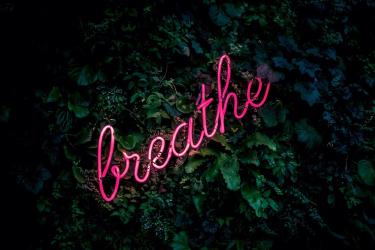
Something interesting is happening in wellness spaces right now. People who’ve spent years perfecting their solo meditation routines, their morning breathing exercises, their private yoga practices-they’re showing up to breathe with strangers.
And they’re not going back.
The Shift Nobody Predicted
For the past decade, self-care messaging has pushed one idea hard: you time. Close the door - put on your headphones. Download an app. The wellness industry built a $4. 4 trillion empire around the notion that healing happens alone.
But here’s what the apps didn’t account for-humans are wired for connection. We regulate our nervous systems through each other. It’s not woo-woo; it’s biology.
When you breathe in sync with other people, something shifts. Your heart rate variability starts to match theirs. Oxytocin releases. That feeling of isolation that modern life breeds so effectively? It loosens its grip.
I talked to a breathwork facilitator in Austin who’s seen her group sessions triple in attendance over the past eighteen months. “People come for the technique,” she told me, “but they stay for the room. There’s something about being held by thirty other humans all doing the same vulnerable thing.
What Actually Happens in a Breathwork Circle
If you’ve never been, picture this: a room with mats or cushions arranged in a circle or rows. Maybe candles, maybe not. Someone guides you through a specific breathing pattern-often a three-part breath or holotropic style-for anywhere from twenty minutes to two hours.
Sounds simple - it’s not.
Breathwork at this intensity moves stuff. Emotions stored in your body start surfacing. You might cry - you might laugh. Your hands might tingle or cramp (it’s called tetany, and it’s harmless). The person next to you might sob. Someone across the room might start shaking.
In a solo practice, this can feel destabilizing. In a group? There’s a strange permission that comes from hearing others process alongside you.
“I used to do breathwork alone with YouTube videos,” one regular attendee at a Brooklyn circle shared. “It always felt like I was doing it wrong when big emotions came up. In the group, I realized-oh, this is just what happens. Everyone’s going through it.
That normalization matters more than most people expect.
Why Your Nervous System Craves Company
Polyvagal theory-developed by neuroscientist Stephen Porges-explains a lot here. Your autonomic nervous system doesn’t just respond to threats. It responds to cues of safety. And other regulated humans are one of the strongest safety cues that exist.
When you’re in a room full of people intentionally calming their nervous systems, yours picks up on it. It’s called co-regulation, and parents do it with infants constantly. Eye contact, breathing rhythms, facial expressions-your body reads these signals and adjusts.
Alone in your apartment with an app? Your nervous system has to do all the work itself.
This doesn’t mean solo practice is worthless. Far from it. But group sessions offer something different. Think of it like exercising alone versus with a running club. Both count as exercise - one carries an extra dimension.
The Loneliness Factor
Let’s be honest about something: people are lonely. The statistics are grim - the U. S. Surgeon General declared loneliness an epidemic in 2023. Young adults report fewer close friendships than any previous generation measured. And all those solo self-care practices? They may have accidentally made things worse.
Group breathwork sessions aren’t marketed as a cure for loneliness. But they function as one.
You show up - you breathe with people. You share space during a vulnerable experience. Sometimes there’s tea afterward, or a talking circle. Connections form-not through small talk, but through shared intensity.
A 45-year-old marketing executive I spoke with started attending a weekly breathwork group after her divorce. “I wasn’t looking for friends,” she said. “I was looking for stress relief. But these people have become my community. We’ve seen each other ugly-cry - that bonds you.
The Accountability Piece
Here’s a practical angle: most people don’t stick with solo practices.
Habit research confirms this repeatedly. We’re more likely to follow through on commitments that involve other people. A class you’ve signed up for. Paid for, where familiar faces will notice your absence-that gets you off the couch on a Wednesday evening when your couch really wants you to stay.
Breathwork apps have notoriously low retention rates. Group sessions? Studios report regulars who’ve been coming weekly for years.
The social expectation isn’t a bug. It’s a feature.
What Types of Group Breathwork Exist
Not all sessions are identical. Some variations to know about:
Holotropic breathwork involves sustained hyperventilation to induce altered states. Sessions run long-sometimes three hours. Usually done lying down with a “sitter” partner. Intense and not for beginners.
Transformational breathwork emphasizes connected breathing without pauses. Often includes movement, sound, and bodywork. Emotional release is expected and encouraged.
Wim Hof method groups focus on cold exposure combined with specific breath holds. More athletic and competitive in vibe. Appeals to the biohacker crowd.
Gentle or regulation-focused sessions prioritize calming the nervous system rather than activating it. Better for trauma survivors or those who find intense practices overwhelming.
Most studios offer multiple styles. Try a few before deciding what fits.
Concerns Worth Acknowledging
Group breathwork isn’t right for everyone in every circumstance.
People with certain psychiatric conditions-particularly those involving psychosis or dissociation-should consult healthcare providers first. The altered states some techniques produce can be destabilizing for vulnerable nervous systems.
Pregnancy is another consideration. Most facilitators recommend gentle techniques only during pregnancy, and some discourage participation entirely during the first trimester.
And some people genuinely do better alone. Trauma responses can be triggered by group settings, by hearing others in distress, by feeling observed. If group sessions consistently feel worse than solo practice for you, that’s valid information. Listen to it.
Finding Your People
Want to try this - start local. Search for breathwork circles, pranayama classes, or conscious breathing workshops in your area. Yoga studios often host them. So do wellness centers, therapy practices, and sometimes even churches.
Read reviews. Talk to facilitators beforehand if you’re nervous. Ask about their training, their approach to intensity, their policy if someone becomes overwhelmed.
Some things to look for: facilitators who screen for contraindications, who provide clear instructions, who create genuine consent around touch (some practices involve hands-on adjustments). Trauma-informed training is increasingly common and worth prioritizing.
Online group sessions exist too-Zoom breathwork became huge during the pandemic. Not quite the same as sharing physical space, but the live component and ability to see other participants adds something that solo videos lack.
The Bigger Picture
This trend toward group practice reflects something larger happening in wellness culture. A correction, maybe. After years of retreat into individual optimization-tracking sleep scores, personalizing supplement stacks, curating morning routines-people are remembering that health was never meant to be a solo project.
We used to move in groups. Sing in groups - process grief in groups. Celebrate in groups. The atomization of modern life stripped a lot of that away.
Group breathwork isn’t recreating traditional village life. Nothing could. But it offers a taste of something our bodies still remember needing: the experience of being human alongside other humans, doing something meaningful together.
Solo practice still has its place. Some mornings, five minutes of deep breathing in your kitchen is exactly what’s called for.
But if you’ve been curious about why everyone’s suddenly joining breathwork circles-now you know. It’s not about the breath alone. It’s about breathing together.