How Samatha and Vipassana Meditation Differ in Brain Impact
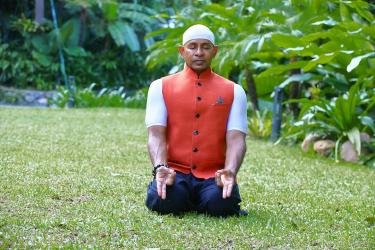
Your brain does different things depending on how you meditate. That probably sounds obvious, but the specifics might surprise you.
I’ve been practicing both samatha and vipassana for years, and I always wondered what was actually happening upstairs when I switched between techniques. Turns out, neuroscientists have been curious too. And what they’ve found is pretty fascinating.
What’s the Difference Between These Two Practices?
Before we get into the brain stuff, let’s make sure we’re on the same page about what these meditation styles actually involve.
Samatha is all about concentration. You pick one object of focus-usually the breath-and you stay with it. When your mind wanders (and it will), you gently bring it back. Over and over - the goal? A calm, stable, focused mind. Some traditions call this “calm abiding” or tranquility meditation.
Vipassana takes a different approach. Instead of narrowing your focus, you’re opening it up. You observe whatever arises-thoughts, sensations, emotions-without getting attached or pushing anything away. It’s insight meditation. You’re trying to see the nature of experience itself.
Think of samatha like a flashlight beam: narrow, concentrated, steady. Vipassana is more like a floodlight: broad, receptive, noticing everything.
Both have been practiced for thousands of years. Both can lead to profound states. But they’re training your brain in fundamentally different ways.
How Samatha Changes Your Brain Activity
When researchers hook up samatha meditators to EEG machines, they see some consistent patterns emerge.
The big finding? Increased gamma waves, especially in the prefrontal cortex. Gamma oscillations are associated with heightened attention and cognitive processing. Experienced meditators show gamma activity that’s off the charts compared to beginners.
There’s also a boost in theta waves during deep samatha practice. Theta is linked to that drowsy, dreamy state between waking and sleeping-but in meditation, it seems connected to deep absorption without losing awareness.
One study from the University of Wisconsin looked at Tibetan monks with 10,000+ hours of concentration practice. During meditation, their gamma activity was 25-30 times stronger than the control group. Twenty-five times - that’s not a small difference.
The sustained attention network lights up during samatha. This includes the dorsolateral prefrontal cortex and the intraparietal sulcus. These areas help you maintain focus on a single object while filtering out distractions.
Here’s something interesting: the default mode network-that part of your brain that activates during mind-wandering and self-referential thinking-actually quiets down during samatha. Less mental chatter - less “me, me, me” thinking. Your brain gets more efficient at doing one thing well.
Vipassana’s Different Neural Signature
Vipassana practice shows a distinct pattern in brain imaging studies.
Instead of laser-focused attention networks, you see activation in the insula and the anterior cingulate cortex. These areas are involved in interoception-awareness of internal body states-and monitoring your own mental processes.
The insula in particular gets a workout during vipassana. This almond-sized region helps you sense what’s happening inside your body. Heartbeat - breathing. Gut feelings. Skilled vipassana practitioners develop what researchers call “enhanced interoceptive awareness. " They literally get better at feeling their own bodies.
Alpha waves increase during open monitoring practices like vipassana. Alpha is associated with relaxed alertness-that state where you’re calm but not drowsy, receptive but not unfocused.
A 2012 study in NeuroImage found that vipassana meditators showed reduced activity in the amygdala when viewing emotional images. The amygdala handles fear and emotional reactions. Less reactivity there means these practitioners weren’t getting as hijacked by emotional stimuli.
And the default mode network? It behaves differently here too, but not quite the same as in samatha. During vipassana, meditators seem to maintain awareness of the default mode’s activity without getting caught up in it. They’re watching their mind wander without wandering with it.
Why This Matters for Regular People
Okay, so monks have unusual brain activity. Cool. But what about those of us who meditate for 20 minutes before work?
The research suggests these neural changes start showing up faster than you might think. One study found measurable differences in brain structure after just eight weeks of meditation practice. Gray matter density increased in areas related to learning, memory, and emotional regulation.
Practically speaking, the different brain impacts suggest different use cases.
Choose samatha-style practice when you:
- Need to improve concentration for work or study
- Feel scattered and overwhelmed
- Want to develop deeper states of calm
- Are preparing for tasks requiring sustained attention
Choose vipassana-style practice when you:
- Want to understand your emotional patterns better
- Are working through difficult experiences
- Need to develop equanimity with discomfort
- Want to reduce emotional reactivity
Many teachers recommend building a samatha foundation first. Makes sense-it’s hard to observe your mind clearly if you can’t focus for more than three seconds. But both styles complement each other.
The Hybrid Approach Most People Actually Use
Here’s a secret: pure samatha and pure vipassana are kind of rare outside of intensive retreat settings.
Most of us practice somewhere in between. You start by focusing on the breath (samatha). Your mind wanders. You notice you’re thinking about lunch (vipassana-ish observation). One return to the breath (samatha again). One notice tension in your shoulders (vipassana). And so on.
This natural oscillation between focused attention and open awareness might actually be ideal for everyday practitioners. You’re training both networks. Your brain learns to concentrate and to observe.
Some traditions, like the Burmese method of Mahasi Sayadaw, explicitly combine both. You use the rising and falling of the abdomen as a concentration anchor while also noting whatever else arises in awareness.
What the Research Still Doesn’t Tell Us
I should be honest about the limitations here.
Most meditation neuroscience studies are small. We’re talking 20-30 participants, sometimes fewer. And there’s huge variation in how different studies define and measure “samatha” and “vipassana. " One researcher’s vipassana might be another’s mindfulness might be another’s open monitoring.
Long-term practitioners in these studies have often done both types of meditation extensively. Separating the effects gets messy.
There’s also the question of what these neural changes actually mean for daily life. More gamma waves sounds impressive, but does it make you a better partner? A kinder person - more effective at your job? The research is suggestive but far from conclusive.
And individual variation is huge. Your brain might respond differently than mine to the same practice.
Starting Your Own Experiment
The best way to understand how these practices affect you? Try them yourself.
Spend a week doing 15 minutes of pure concentration practice daily. Pick one object-breath at the nostrils is traditional-and stick with it. Notice how you feel afterward. How’s your focus during the day? Your emotional state?
Then spend a week doing open awareness practice. Sit and notice whatever arises without trying to control it. Thoughts, sounds, sensations-just observe. Compare notes with your concentration week.
You don’t need an EEG machine to notice the differences. Pay attention to your attention, and you’ll start to see which style serves you in different situations.
Both samatha and vipassana have been refined over millennia because they work. The brain science is starting to explain why. But , your own experience is the most relevant data point.
Your brain is already changing with every meditation session. Understanding how different techniques create different changes? That’s just useful information for choosing your practice wisely.